Altadena Now is published daily and will host archives of Timothy Rutt's Altadena blog and his later Altadena Point sites.
Altadena Now encourages solicitation of events information, news items, announcements, photographs and videos.
Please email to: Editor@Altadena-Now.com
- James Macpherson, Editor
- Candice Merrill, Events
- Megan Hole, Lifestyles
- David Alvarado, Advertising



Thursday, July 2, 2026
Guest Opinion | John Williams: Democracy Requires More Than Celebration. It Requires Truth-Telling
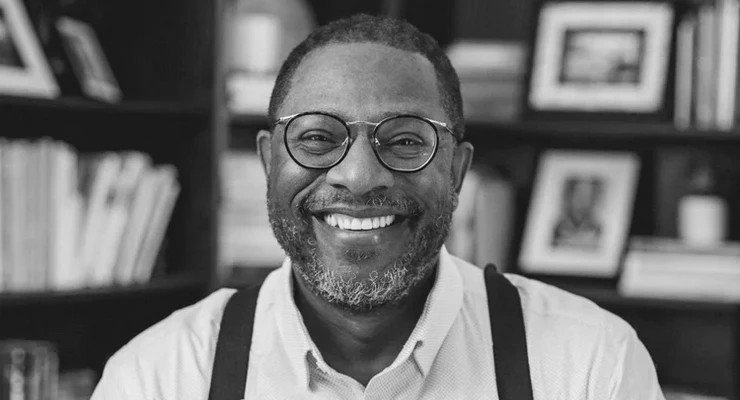
As the nation prepares to celebrate its Semiquincentennial (try saying that three times really fast), Americans will gather beneath fireworks, wave flags, sing patriotic songs, and hear speeches about freedom, democracy, and the “wildly successful” American experiment.
There is nothing inherently wrong with celebration. Nations need rituals. People need moments of gratitude. But as the fanfare surrounding America 250 grows louder, I find myself wrestling with a different question: What happens when celebration becomes a substitute for truth?
The question is not whether America should celebrate. The question is whether America will ever be willing to celebrate honestly. For generations, Black writers, historians, artists, theologians, and activists have challenged the nation to confront this very question. Their challenge was never simply about the past. It was about memory. It was about freedom for all. It was about whether a nation can remain healthy when it tells itself only the stories it wants to hear.
I have been thinking about another national birthday. In 1976, America celebrated its Bicentennial. I was 12 years old, a seventh grader attending middle school just 20 miles outside Philadelphia. For a year, the country seemed wrapped in patriotism. The official Bicentennial events began April 1, 1975, when the American Freedom Train launched in Wilmington, Delaware to start its 21-month tour of the 48 contiguous states. Then president, Gerald Ford stressed the themes of renewal and rebirth based on a restoration of traditional values, giving a nostalgic and exclusive reading of the American past.
I remember the excitement, the flags and the parades. I remember hearing Elton John’s “Philadelphia Freedom” everywhere. Living near Philadelphia, the city where the Declaration of Independence was signed, the song felt almost like the soundtrack of the moment.
What I do not remember is equally important. I do not remember anyone discussing Frederick Douglass’s question: “What, To The American Slave, Is Your Fourth of July?” I do not remember learning about the Massachusetts Anti-Slavery Society meetings where Sojourner Truth addressed large crowds of abolitionists fighting against slavery. I do not remember learning about Ida B. Wells and her anti-lynching law campaign. I do not remember reading Langston Hughes’s “Let America Be America Again,” or Paul Robeson’s searching question through the song, “What Is America To Me?”
I do not remember being invited to wrestle with the contradiction of a nation founded on liberty while millions remained enslaved. The silence was not obvious to me then. The story I was given felt complete because I did not yet know there were other stories. Looking back, I realize the issue was not that we celebrated. The issue was that celebration had exalted erasure. The issue was that we were not invited to wrestle with the whole story of America.
Nearly fifty years later, as the nation approaches its 250th birthday, it appears we are on track to make the same mistake again.
Most Americans can tell some version of the nation’s founding story. A handful of men declared independence, some tea was spilled, a revolution was fought and democracy was born. It is a story repeated in textbooks, monuments, museums, and civic ceremonies. It is also an incomplete story.
Alongside declarations of liberty existed slavery. Alongside democratic aspirations existed Indigenous dispossession. Alongside promises of equality existed forced expulsion of Chinese residents from cities, including Pasadena. These realities are not footnotes to the American story, they are an integral part of the story. Yet we often behave as though acknowledging these contradictions somehow diminishes the nation.
James Baldwin understood this tendency well. He argued that Americans are often trapped by a desire for innocence. Innocence allows many to imagine that injustice belongs safely in the past. Innocence allows many to celebrate without examining. Innocence allows many to inherit the benefits of history without confronting its costs.
But democracies cannot survive on innocence. Democracies require citizens willing to tell the truth. The temptation facing America 250 is not that we will celebrate. The temptation is that we will continue to remember selectively. That we will continue to embrace the parts of the story that inspire us while erasing the parts that trouble us. In short, many will choose mythology over memory.
For nearly as long as America has existed, Black writers and thinkers have challenged the nation to tell a fuller story about itself.
In 1852, Frederick Douglass stood in Corinthian Hall before an audience of hundreds and exposed the distance between America’s ideals and its realities. Douglass’s provocative question remains unsettling because it forces listeners to see the nation from the perspective of those excluded from its promises.
W.E.B. DuBois revealed the contradiction of a democracy that proclaimed freedom while constructing racial hierarchy. Ida B. Wells exposed the violence that lurked beneath American claims of civilization and progress. Langston Hughes recognized that America had failed to live up to its ideals while still insisting that those ideals remained worth pursuing.
Paul Robeson challenged narrow definitions of patriotism and asked who gets to define the nation and who belongs within its story. Zora Neale Hurston documented the beauty, complexity, and humanity of Black life in a society determined to reduce Black people to a problem rather than recognize them as fully human. And James Baldwin warned that what a nation refuses to face will continue to repeat.
More recently, Ta-Nehisi Coates has reminded us that historical injustices do not simply disappear because we grow tired of discussing them. The debts of history remain present in our institutions, communities, and opportunities. Ruha Benjamin has challenged us to move beyond passive language and confront the people, institutions, and systems that produced harm in the first place. Repair becomes impossible if we refuse to name the protagonists.
Though separated by generations, these voices share a common conviction. Silence is not neutrality. Forgetting is not healing. And democracy requires more than celebration. It requires truth.
We often describe democracy as a system of government. But democracy is also a practice of collective remembering. Citizens make decisions based on the stories they inherit about who they are, how they arrived here, and what obligations they owe one another. When those stories become distorted, democracy itself becomes vulnerable. A people who refuse to examine the past will struggle to understand the present.
This is why historical memory matters. Not because we should live in the past. But because the past continues to live in us. The neighborhoods we inhabit, the schools our children attend, and the opportunities available to some and denied to others. None of these realities emerged by accident. The historian Emily Lieb writes, “Nothing in a city happens by accident. The cities we have are the cities we built. The communities we have are the communities we chose.” The same can be said about national memory.
The real question before us is not whether America deserves celebration. The real question is what kind of celebration we are willing to embrace. Will America 250 become an exercise in patriotic nostalgia? Or will it become an opportunity for national reflection? Will we tell a story populated only by founders and presidents? Or will we tell a story spacious enough to hold both the nation’s aspirations and its contradictions?
Arguably, the train has already left the station for a more honest reflection on history for America 250. Perhaps by the time America approaches its tricentennial in 2076, we will understand that a true democracy does not require mythology to sustain itself. It requires the courage to tell the truth. W.E.B. Du Bois understood this when he observed that nations make “hideous mistakes,” commit “frightful wrongs,” and also accomplish “great and beautiful things.” In short, we are invited to live a story spacious enough to hold both freedom and contradiction, both achievement and injustice, both pain and possibility. A celebration mature enough to tell the truth.
John Williams is a Cultural Memory Keeper and Community Historian who leads The Center for Restorative Justice in Pasadena, California. He guides communities through immersive racial justice pilgrimages, cohorts, and workshops that uncover buried histories and highlight the intertwined legacies of violence, resistance, and resilience. His work blends historical rigor with communal storytelling, offering remembrance as a pathway toward repair.
Altadena Calendar of Events
For Pasadena Events, click here