Altadena Now is published daily and will host archives of Timothy Rutt's Altadena blog and his later Altadena Point sites.
Altadena Now encourages solicitation of events information, news items, announcements, photographs and videos.
Please email to: Editor@Altadena-Now.com
- James Macpherson, Editor
- Candice Merrill, Events
- Megan Hole, Lifestyles
- David Alvarado, Advertising



Monday, August 31, 2026
Wildfire Deal With Governor Drops Non-Economic Damage Limits Altadena Eaton Fire Survivors Fought
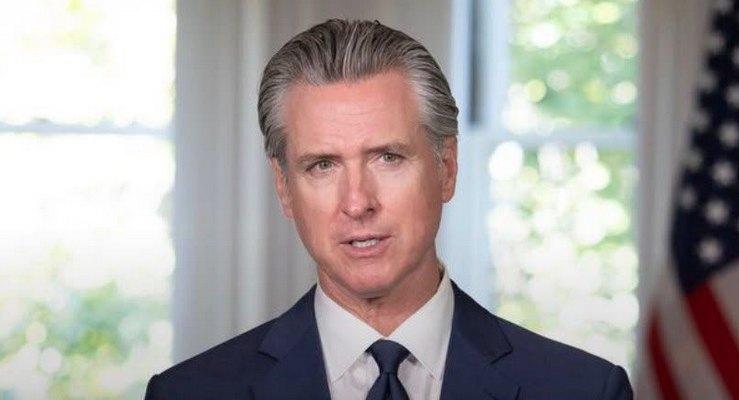
State lawmakers resisted Gov. Gavin Newsom’s effort to limit non-economic damages for wildfire survivors, a proposal that survivors of the Eaton Fire in Altadena relentlessly campaigned against, under a narrowed wildfire agreement announced Saturday.
The deal, which lawmakers will vote on Tuesday, Sept. 1 in Senate Bill 492, does not include most of the proposals Newsom wanted and does not substantially change how much utilities must pay after fires they cause. Opponents of his original plan included insurance companies, consumer advocates and survivors of the January 2025 Eaton Fire that Los Angeles County said was caused by Southern California Edison equipment that killed 19 people in Altadena.
“The governor was demanding attacks on economic and non-economic damages. Those were fully gone. Attacks on cities, attacks on insurance policy holders, all of those are gone in the new bill. So that is what wildfire survivors want,” said Joy Chen, Executive Director of the Every Fire Survivor’s Network, the nation’s largest survivor recovery hub.
Newsom backed off his proposal to reduce costs for electrical utilities after their equipment sparks wildfires, agreeing instead to a narrower deal after homeowners, insurers and fire survivors argued his original plan would have shifted those costs onto them.
Newsom wanted utilities to have to pay less to insurance companies, some wildfire survivors, local governments and corporations claiming damages after a fire. His administration is concerned the mounting costs threaten investor confidence in the state’s three major for-profit utilities: Pacific Gas & Electric, Southern California Edison and San Diego Gas & Electric. He said that could lead to higher borrowing costs for the companies and higher electricity bills for Californians. Newsom also argued his plan would prioritize paying survivors who lose their homes.
The agreement would prohibit private equity groups from investing in wildfire claims and deny utility CEO bonuses in the years their companies cause fatal fires. It would also create a “fast-pay” program for survivors’ property loss, pain and suffering in the wake of a utility-caused fire. The state also commits to improving its local wildfire mitigation efforts and sharing more data on insurance coverage in areas with fire risk.
The program would include deadlines for determining which claims are valid within 60 days of receipt, and settlement offers within 30 days after that, but survivors could still pursue the long process of suing utilities if they choose.
The biggest sticking point was Newsom’s insistence on eliminating subrogation, which allows insurance companies to sue utilities to recoup their costs for wildfire claims. Lawmakers were staunchly opposed to eliminating that avenue out of concern that it would disrupt the state’s fragile insurance market, raise premiums and cause insurers to flee the state, and they rejected it.
The agreement caps a contentious series of closed-door negotiations in Sacramento between Newsom’s office and legislative leaders on how much utility companies should pay after fires.
Sen. Sasha Renée Pérez, a Democrat who represents Eaton Fire survivors, commended survivors for pressuring lawmakers over the past couple of weeks.
“The fire survivors have shaped this entire conversation,” Pérez said. “They made a tremendous impact.”
“We know that in many cases, insurance companies delayed and denied fire survivors’ claims and payments, delaying recovery,” Pérez said. “We need all industries to come to the table in a real way.”
In a statement Saturday morning, Newsom said, “This system needs full structural reform — not a partial one,” and urged the Legislature to build on the progress next year.
“While we appreciate the efforts made, we are disappointed that the state couldn’t develop comprehensive wildfire reform,” said Southern California Edison spokesperson David Eisenhauer.
California’s $18 billion wildfire fund, which utilities draw from to pay fire damages and which would fund claims in the fast-pay program, is funded 50-50 by utility customers and shareholders. Proponents of Newsom’s proposals remain concerned that another catastrophic fire could drain that money, leaving utilities facing a mountain of costs and another round of potential bankruptcies.
Nine of the state’s 20 most destructive wildfires were caused by electrical equipment or power lines.
Sen. Josh Becker, a Menlo Park Democrat who was closely involved in the negotiations, acknowledged that lawmakers would likely have to return to the issue of utility liabilities under a future governor.
“They’re willing to start getting around the table and looking at some of those structural issues. But that takes time. We ran out of time in this session,” Becker said.
But as elected officials and some survivor organizations characterize Governor Gavin Newsom’s wildfire reform agreement as a victory for fire survivors, some Altadena fire survivors and a long-time local group called Beautiful Altadena are pushing back.
“Stopping something worse is not the same thing as winning,” said Shawna Dawson Beer, creator of Beautiful Altadena and an Eaton Fire total loss survivor. “We need to ask the most basic questions. What did Altadena actually get out of this deal? What did Eaton Fire survivors get? And what did we secure for the next community destroyed by a utility caused fire? The answer is not much.”
Altadena Calendar of Events
For Pasadena Events, click here