Altadena Now is published daily and will host archives of Timothy Rutt's Altadena blog and his later Altadena Point sites.
Altadena Now encourages solicitation of events information, news items, announcements, photographs and videos.
Please email to: Editor@Altadena-Now.com
- James Macpherson, Editor
- Candice Merrill, Events
- Megan Hole, Lifestyles
- David Alvarado, Advertising



Wednesday, November 18, 2026
PUSD Board to Consider Plan Setting 2029-30 Target for First School Mergers
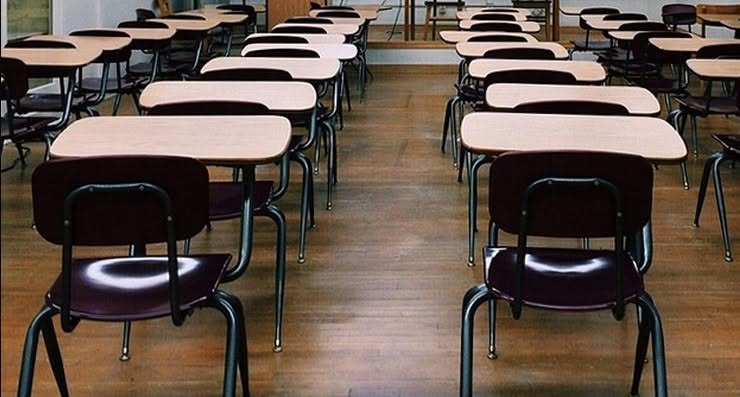
Staff proposal would build a community vision and seat a 29-member advisory committee before any recommendations to merge, consolidate or close schools reach the board
Pasadena Unified School District staff will ask the Board of Education on Thursday to approve a multiyear “District Transformation Process” whose timeline would launch the first redesigned school consolidations, at the elementary level, in the 2029-30 school year.
The proposal, “District Transformation Process: Forward Together,” submitted by Superintendent Elizabeth Blanco, names no schools.
Instead, it sets the order of work: a community vision first, then a community advisory committee, then staff recommendations, board decisions, and transition planning. Secondary school redesigns would follow in 2030-31, with both launch dates “subject to future Board decisions and transition planning,” according to the staff report.
That schedule is two school years later than the district’s previous planning effort, which the board had approved to examine potential school consolidation for the 2027-28 school year, according to the district’s website.
The presentation describes the purpose as building “a long-term healthy and viable district by aligning resources and decisions with shared goals.” Its stated aims include a stronger sense of belonging for students, equitable access to high-quality programs, “stable, appropriately sized” learning environments, more revenue, stable or growing enrollment, greater family confidence and schools that “remain centers of their communities.”
Five steps
The first step is a districtwide visioning process meant to produce a shared vision with a 10- to 15-year horizon, including portraits of the district’s graduates, of the adults who work in it and of its system, plus a set of core values. Under the proposed timeline, the district would prepare from November through December, run the visioning process from January through May 2027 and deliver results to the board in June 2027.
The second step is a Community Transformation Advisory Committee of 29 members: six parents and caregivers, four students, three teachers and certificated staff, three classified staff, three school or district administrators, four labor leaders, three community members and partner organizations, and three civic representatives from Altadena, Pasadena and Sierra Madre.
Staff would select members through public applications and a board-approved process, publishing the application and selection criteria in May 2027 and announcing members in June 2027; the committee would do its work during the 2027-28 school year. District staff would facilitate, and staff and outside experts could serve as nonvoting technical advisors, according to the presentation.
The committee would review the visioning results, enrollment trends and district analyses, analyze the impact of inaction, consider redesign options and develop recommendations for elementary and secondary schools. Staff and the committee would also hold engagement meant to give families, students, employees and school communities opportunities to influence recommendations before decisions are final.
Staff would then combine the vision and committee work into a districtwide proposal for the board, including specific school and program recommendations, use of any affected facilities and a preliminary transition plan. The presentation’s timeline lists recommendations and board decisions during 2027-28 and planning and transition work in 2028-29. The fourth and fifth steps are carrying out the board’s decisions under a detailed transition plan and launching the redesigned schools.
Guardrails
The proposal includes six guardrails. Three set standards for redesign: “Educational opportunity must improve, not diminish”; “Equity must be demonstrated, not assumed”; and redesign should result in financial sustainability that is “real and measurable,” with accountability for net savings, transition costs, staffing, transportation, facilities and long-term operational impacts.
The other three are protections for students and families. Members of the graduating classes of 2027 through 2030 would be able to remain at and graduate from their current high schools. If redesign recommendations include a merger, consolidation or closure, students currently attending affected schools would receive priority in the district’s first enrollment lottery period. And affected school communities would get at least one full year of planning, preparation and implementation before a redesigned configuration takes effect.
The staff report says those guardrails are “intended to minimize disruption to students and families” and to support an equitable transition if the board later approves redesign recommendations.
Cost
Approving the process carries no fiscal impact at this time, according to the staff report. Carrying it out is estimated to cost $300,000, with actual spending varying by need. Potential expenses include materials, consulting services, child care, community meetings, meals, extra-duty pay, staff in-kind time and facilities use. The report lists Assembly Bill 100 as the funding title, with the budget code shown as “TBA,” and says any expenditure requiring board approval will come back to the board.
How the district got here
The district’s earlier planning effort was conducted in alignment with Resolution 2852, “Establishing Optimal School Sizes,” according to the district’s website. Its advisory committee held its final meeting May 11. LAist reported that the process was put on hold after public outcry and after a local investigation raised questions about its transparency.
On June 25, the board approved Resolution 2894, which started the District Transformation Process, on a 4-3 vote, according to the district presentation and LAist. The board approved the final definition of the process Oct. 8. On Oct. 22, it approved moving forward with visioning and directed Blanco to return Nov. 19 with a proposed process covering the structure, responsibilities and target seating date of a staff-facilitated community committee.
If you go
The Pasadena Unified Board of Education takes up the proposal Thursday, Nov. 19, in the Elbie J. Hickambottom Board Room, Room 236, at 351 S. Hudson Ave. in Pasadena. The board is scheduled to convene at 4 p.m. and go into closed session, then reconvene in public at 7:30 p.m.; the agenda says all times are approximate. The full agenda and attachments are posted at BoardMeetings.info. The district broadcasts regular board meetings live on Charter Cable Channel 95 and at live.boardmeetings.info. Spanish and American Sign Language translation can be requested by emailing publiccomment@pusd.us at least 24 hours before the meeting; Spanish interpretation is available at the meeting.
If the board approves the plan, preparation for the visioning process would begin this month.
None of the rules required a wording change: the article had no footnotes, double hyphens, AM/PM times, “2025” dates or “th” endings, and its numbers already followed AP style. Only the spacing between paragraphs changed. The wording in the Google Doc PJFRT D7 is identical to this version; I did not add the extra blank lines there.
Altadena Calendar of Events
For Pasadena Events, click here