Altadena Now is published daily and will host archives of Timothy Rutt's Altadena blog and his later Altadena Point sites.
Altadena Now encourages solicitation of events information, news items, announcements, photographs and videos.
Please email to: Editor@Altadena-Now.com
- James Macpherson, Editor
- Candice Merrill, Events
- Megan Hole, Lifestyles
- David Alvarado, Advertising



Sunday, October 25, 2026
Clocks Fall Back One Hour November 1 as Bill to End the Switch Waits in the Senate
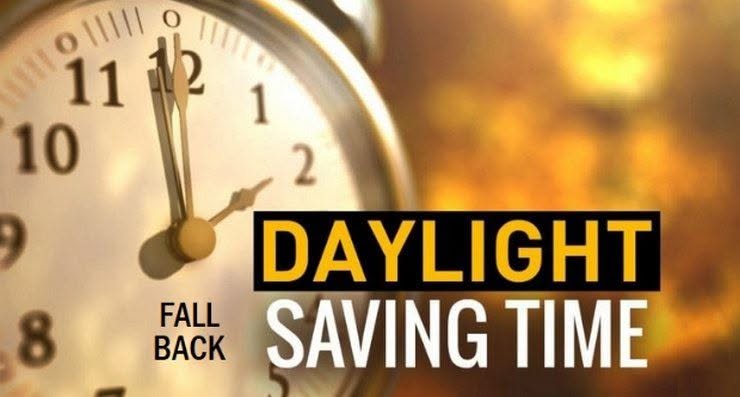
Pasadena returns to Pacific standard time at 2 a.m. Nov. 1; Rep. Judy Chu voted against the House-passed plan for permanent daylight time
Pasadena residents will set their clocks back one hour early Sunday, Nov. 1, when daylight saving time ends and California returns to Pacific standard time.
At 2 a.m. local time, clocks will read 1 a.m. again, and the hour from 1 a.m. to 2 a.m. will repeat, according to the National Institute of Standards and Technology, the federal agency that publishes the nation’s daylight saving time rules.
The night gains an hour on the clock, though, of course, that does not guarantee every resident an extra hour of sleep.
The change shifts the region from Pacific daylight time, seven hours behind Coordinated Universal Time, to Pacific standard time, eight hours behind.
The schedule is set by federal law. The Uniform Time Act of 1966, as amended in 2005, starts daylight saving time on the second Sunday of March and ends it on the first Sunday of November. Those dates took effect March 1, 2007, replacing the earlier April and October schedule. This year’s daylight saving period began March 8.
The U.S. Department of Transportation regulates time zones and daylight saving time.
Federal law overrides any conflicting state or local rule on changeover dates, so Pasadena cannot set a schedule of its own.
This year, state Senate Bill 1197, titled “Permanent standard time,” was introduced Feb. 19. A Senate committee voted 10-1 on April 7 to recommend that it pass and be re-referred to the Appropriations Committee. The bill was placed on the Appropriations suspense file April 20, and at a May 14 hearing it was held in committee and under submission.
In Washington, the House voted 308-117 on July 14 to pass H.R. 139, the Sunshine Protection Act of 2025, which would make daylight saving time permanent. The bill was introduced Jan. 3, 2025. Republicans supported it 193-22, Democrats 114-95, and one independent voted yes.
The Senate received the bill July 15 and referred it to the Senate Commerce, Science and Transportation Committee just last week.
Rep. Judy Chu, who represents Pasadena, was among the 117 members who voted no.
The state and federal proposals point in opposite directions: the federal bill would keep clocks on daylight time year-round, while the California bill sought permanent standard time.
Other approaches have been referred to House committees. H.R. 300, introduced Jan. 9, 2025, by Rep. Celeste Maloy, would let states choose year-round daylight time. H.R. 7378, introduced Feb. 4 by Rep. W. Gregory Steube, proposes amending the Calder Act to permanently adjust American time.
Rep. Vern Buchanan has said a permanent daylight time provision was added by amendment to H.R. 7389, the Motor Vehicle Modernization Act of 2026, a transportation bill introduced Feb. 5 by Rep. Brett Guthrie. A House committee ordered that bill reported, as amended, by a 48-1 vote on May 21. The vote covered the full transportation package.
The Senate has acted on the idea before. It passed a separate, earlier bill, S. 623, the Sunshine Protection Act of 2021, by unanimous consent March 15, 2022, during the 117th Congress.
Unless the law changes, clocks will spring forward again on the second Sunday of March, which falls on March 14, 2027.
Altadena Calendar of Events
For Pasadena Events, click here