Altadena Now is published daily and will host archives of Timothy Rutt's Altadena blog and his later Altadena Point sites.
Altadena Now encourages solicitation of events information, news items, announcements, photographs and videos.
Please email to: Editor@Altadena-Now.com
- James Macpherson, Editor
- Candice Merrill, Events
- Megan Hole, Lifestyles
- David Alvarado, Advertising



Friday, May 15, 2026
Guest Opinion | Francesca Mariani: Schools Do Not Flourish Without Community
Change Requires Legitimacy
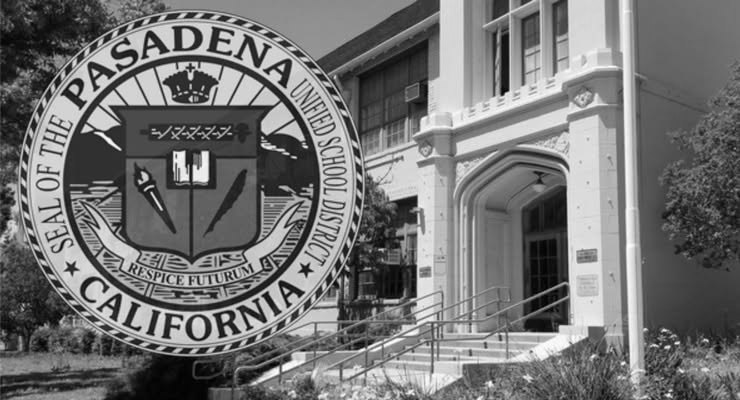
As the Pasadena Unified School District board considers major school closure and restructuring decisions, one thing has become increasingly clear: families are not resisting change simply because change is difficult. They are resisting a process that has asked communities to absorb enormous consequences without meaningfully including them in shaping the future.
Schools are not simply facilities or enrollment charts. They are communities where children develop identity, belonging, relationships, and confidence over many years. When trust in schools erodes, the damage extends far beyond enrollment numbers. Families disengage. Teachers leave. Students internalize instability.
Effective change requires legitimacy.
The Process Has Lost Public Confidence
From the beginning, the district’s restructuring effort has been top-down rather than being community-led. The community has been presented with scenarios and spreadsheets but have been excluded from the larger conversation about what kind of district Pasadena wants to become.
The installation of the Superintendent’s School Consolidation Advisory Committee (SCAC) itself increasingly reflected those concerns. Rather than operating as an independent community body with meaningful agency, members were placed in the position of reacting to assumptions and recommendations developed, presented, and crafted by an outside consultant. In that sense, the committee risked becoming a pawn to the firm rather than a true partner in democratic decision-making.
That concern became impossible to ignore when roughly two-thirds of the committee voted against all consolidation proposals presented to them. Members repeatedly cited weak transparency, insufficient information, lack of meaningful engagement, and concerns about the quality of the analysis itself.
That vote matters. It was not simply frustration from the broader community. It came from the very committee assembled to guide and legitimize the process.
Yet district leadership now appears prepared to continue advancing closure decisions despite both the committee’s recommendations and widespread public concern. That approach risks deepening distrust at precisely the moment when public confidence and collaboration are most needed.
A major May 2026 research brief from the Getting Down to Facts initiative at Stanford University raised many of the same concerns. The report found that school closures do not always generate the expected fiscal improvements because savings are often offset by enrollment loss, fixed costs, transportation burdens, and community disruption.
The report also emphasized the importance of evaluating transportation impacts, student equity implications, facility conditions, and community consequences before advancing closure decisions. These are precisely the analyses many Pasadena families believe are still incomplete or missing.
Schools Must Support Human Flourishing
A healthy educational system does not focus only on efficiency. It asks whether students are flourishing.
Are students connected, supported, inspired, and safe? Are schools creating belonging, opportunity, leadership, and stability across diverse communities?
These forms of success are harder to quantify than building-capacity charts, but they are often the reason families remain committed to public education.
Strong communities are built through relationships, shared responsibility, and collective problem-solving. Students, families, teachers, counselors, and staff must have a meaningful role in shaping decisions that directly affect their lives.
Not as a symbolic gesture after the fact, but as active partners throughout the process.
A Better Path Forward
If the district wants public trust, the process must be reset before irreversible decisions are made. PUSD must not just go ahead with closing schools without meaningful community involvement.
Pasadena needs a true community visioning process co-led by the district and the community itself — not simply another round of presentations after key decisions have already been shaped behind closed doors.
That process should begin with open questions, not predetermined outcomes. What programs are working? Why do families choose certain schools? What communities and pathways should be preserved? How can the district remain financially sustainable while strengthening, rather than destabilizing, public trust and enrollment?
The district should establish community working groups, hold facilitated town halls centered on collaborative problem-solving, and publicly release financial models, facilities analyses, transition risks, and alternative scenarios before moving forward.
Most importantly, the district must be willing to listen — not merely collect feedback, but allow community input to meaningfully shape outcomes.
This would not weaken decision-making. It would strengthen it.
Children are watching how adults navigate this moment. They are learning whether institutions listen, whether communities matter, and whether difficult problems are solved collaboratively or imposed through power.
That lesson may matter as much as the closure decision itself.
Francesca Mariani is a parent of two children attending schools in the Pasadena Unified School District.
Altadena Calendar of Events
For Pasadena Events, click here