Altadena Now is published daily and will host archives of Timothy Rutt's Altadena blog and his later Altadena Point sites.
Altadena Now encourages solicitation of events information, news items, announcements, photographs and videos.
Please email to: Editor@Altadena-Now.com
- James Macpherson, Editor
- Candice Merrill, Events
- Megan Hole, Lifestyles
- David Alvarado, Advertising



Tuesday, September 15, 2026
Altadena Soils Showed More Hexavalent Chromium Than the Palisades, Study Finds
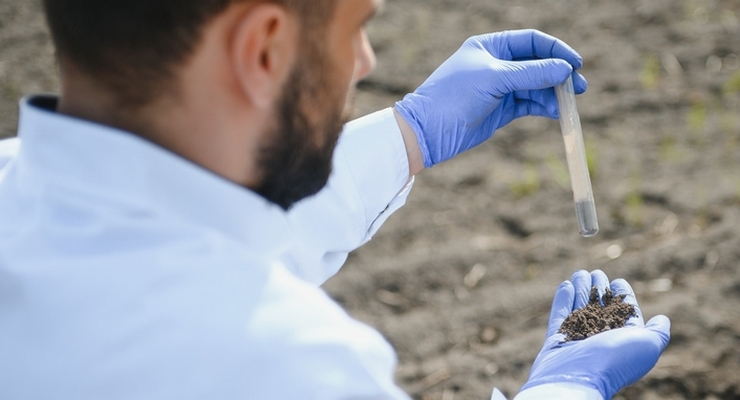
A graduate study becoming public Tuesday reports a median of 0.22 milligrams per kilogram in Altadena, and some already-scraped lots still sat above California’s residential screening level
Soil sampled in Altadena neighborhoods burned in the Eaton Fire carried nearly twice the hexavalent chromium measured in the Palisades burn area, according to a University of California, Los Angeles study to be publicly released Tuesday, Sept. 15.
The study reports a median hexavalent chromium concentration of 0.22 milligrams per kilogram in Altadena and 0.12 milligrams per kilogram in the Palisades area. Both figures sit below the U.S. Environmental Protection Agency residential soil screening level of 0.95 milligrams per kilogram, which the researcher cites for carcinogens at a risk factor of one in one million.
Soil at some individual properties exceeded California’s more stringent residential screening level of 0.3 milligrams per kilogram. Those exceedances appeared around standing homes, around the perimeters of burned homes, and in some soils that had already been scraped.
Scraping lowered concentrations overall, the study found, but did not bring every property below the state threshold.
The work is by Carmen Lizeth Fregoso Valdovinos and was submitted to the University of California, Los Angeles, where it is held in the campus electronic theses and dissertations collection. Her adviser was Sanjay Mohanty, an associate professor of civil and environmental engineering at the university’s Samueli School of Engineering, who has led free soil testing for fire-affected residents. The record does not describe the work as peer-reviewed.
Samples were collected from burned homes, standing homes and non-burned reference sites in the two burn zones. At burned properties, composite samples were taken separately from the area where debris and soil had been scraped and from the surrounding perimeter, where soil had not been removed. At standing homes, samples came from the front yard, back yard and both side yards. Hexavalent chromium was extracted using a phosphate buffer and measured by inductively coupled plasma mass spectrometry.
Altadena soil generally held more hexavalent chromium than Palisades soil, a difference the study attributes to the pace of recovery, to rainfall washing the compound away after the fires and to legacy contamination. The finest particles, smaller than 75 micrometers, were the most enriched, a fraction the study notes is both mobile and inhalable.
The study concludes that its findings support “targeted soil monitoring and site-specific remediation” keyed to each site’s history and terrain.
For Altadena homeowners, the finding does not translate into an available chromium test. The Los Angeles County Department of Public Health offers free residential soil testing for the Eaton and Palisades fire areas, but that program screens for lead. Residents collect their own samples and drop them at the One Stop Permit Center, 464 W. Woodbury Road, Suite 210, in Altadena, weekdays from 8 a.m. to 4:30 p.m., with results emailed in seven to 10 business days. Department program materials say the testing is scheduled to run through 2026.
The Community Action Project-Los Angeles, the civic initiative whose testing Mohanty oversees, offers free analysis to homeowners whose properties are selected for it. In its published frequently asked questions, the project says homeowners have reported private companies charging $5,000 to $10,000 to sample and analyze a property.
The Pasadena Public Health Department, in guidance issued after earlier lead findings, has advised residents in affected neighborhoods to keep children and pets out of bare soil, to cover exposed soil with grass, mulch, wood chips or gravel, to rinse hard outdoor surfaces and to wash hands after contact with soil.
Separately, and in a different medium, researchers have reported hexavalent chromium nanoparticles in outdoor air in the Eaton and Palisades areas during debris cleanup. That peer-reviewed work, published in the journal Communications Earth & Environment on May 13, 2026, measured airborne particles rather than soil. Neither record links the two sets of findings.
The study record: Chromium (VI) Contamination in Residential Soils After the 2025 Los Angeles Wildfires, University of California eScholarship, https://escholarship.org/uc/item/40b7h1rf.
Altadena Calendar of Events
For Pasadena Events, click here